Improving Librarians’ Research Confidence

Last week I attended the 2016 conference of Qualitative and Quantitative
Methods in Libraries
, and presented a paper I co-authored with two wonderful
colleagues from Loyola Marymount University (LMU), Marie and Kris. In this presentation, we talked about the
mapping between librarians’ research confidence and the curriculum of the Institute of Research Design for Librarianship (IRDL), a
federally funded program that provides research methods training for
librarians. For each topic covered in the training program (e.g. research
question development, research design, data collection, data analysis, research
dissemination), librarians’ confidence was measured before and after the
program, and increase was detected across the board. This was consistent with the
preliminary findings of another study we are conducting. In that study, we seek
to understand the long term impact of IRDL by asking the participants to
describe three incidents where they strongly felt the benefits of IRDL in their
work or research. So far we have seen quite a number of narratives about how
they felt more confident when working with faculty, talking to people at
conferences and interpreting the published literature.

According to Bandura, mastery experiences build confidence through
success and provide an individual with the ability to persevere in the face of
obstacles, which is especially important in performing difficult tasks, such as
conducting research in the traditionally practical library profession (lack of
confidence is often cited as a barrier to librarians’ research engagement). I’m
glad to see that IRDL has been able to improve librarian’s research confidence
and help them become more confident and competent practitioner researchers. The
third cohort of IRDL will gather in LMU for their training in less than a week,
and I look forward to meeting them!

QQML 2014

I just got back from the 6th QQML conference in Istanbul. As always, it’s a fruitful trip. What I particularly liked this year was Cornell University Librarian Anne Kenney’s keynote talk “Defining 21st Century Research Libraries to Implementing 21st Century Research Universities”, where she talked about the paradigm shift among academic libraries that are focusing less on measuring what libraries are doing and more on developing metrics that measure how well they are enabling research universities to thrive in the 21st century. Her talk gave me a lot to think about, particularly for the research methods course I intend to develop that focuses on academic librarianship.

I also enjoyed the LibQUAL-related presentations at the conference, which not only included presentations sharing results of LibQUAL surveys in libraries in different countries, but also one interesting presentation that described translating LibQUAL in other languages ( the historical context, the functionality of the current web interface in handling different languages and a reliability and validity analysis for selected language versions). LibQUAL is a great example of conducting survey research in LIS, and in the fall I will be teaching a course about survey research. So these presentations were timely and beneficial.

During the conference I spent quite a bit of time talking to a group of scholars from Taiwan. Two of them got their master’s in LIS and PhD in education. Their students are school teachers, and they are developing information literacy standards and instruction strategies at K-12 level. In Taiwan, teachers are responsible for information literacy instruction in addition to subject teaching, and now the increasing workload has made it necessary to have special teacher positions that exclusively focus on information literacy. This is quite different from the US, there the trend is reversed and school librarian positions are getting cut everywhere because of budget problems. Another Taiwanese Professor comes from National Chengchi University and they have the only online LIS master’s program in Taiwan. We talked a lot about online education and I invited her to share the experience of their online program at the Library 2.014 conference. It’s always nice to learn about online education from the international perspective.

Finally, another highlight of this conference was seeing my old friends Songphan and Cristina. I saw them last year in Rome but didn’t get to talk much because of our different schedules. It’s just wonderful to see them again and catch up with them.

QQML 2013

image

Last week I was in Rome attending the 2013 International Conference on Qualitative and Quantitative Methods in Libraries (QQML), where 288 papers from all over the world were presented, covering a wide variety of topics in LIS. I had a great time talking to librarians, educators and researchers from different countries and learning about their research. Two of my old friends from Chapel Hill were also there – it’s been six years since I last saw them, and it was just wonderful to see them again.

The papers that interested me most were the ones about library assessment and valuation. Recently I have been thinking about developing a course entirely on library assessment. This topic has been a component in many courses in our program, but I think it is important enough to spend a full course on it. More and more libraries, especially academic libraries are facing increasing pressures to establish their relevance and value, and assessment is critical in this process.

Here are a few papers about library assessment that I enjoyed:

  •  A survey study to examine students’ use of an academic library, its resources and spaces, and their engagement and persistence at UT Austin (by Meredith Taylor).
  •  A project using the Understanding Library Impacts (ULI) protocol to assess library contributions to undergraduate  student learning at Barnard College (by Derek Rodriguez and Lisa Norberg).
  •  A study using the MISO survey to assess the quality and effectiveness of library services (by David Consiglio, Katherine Furlong and Gentry Holbert).
  • The single or joint use of qualitative and quantitative metrics to support library accreditation efforts, funding requests and assess user needs and expectations ( by Michael Maciel).
  • The best practices of data visualization and examples of how some of them have been applied in libraries (by Rachel Besara).

There are also a couple of papers about health information access that caught my attention. This is an area that I wish to further explore. I just learned this morning, my first paper in this area, “Preparing Public Librarians for Consumer Health Information Service: A Nationwide Study”, co-authored with Dr. Van Ta Park, has been accepted to publish in Library and Information Science Research. Van and I will also discuss ideas of developing grant proposals together to fund our collaborative research pursuit down the path of health information.

Overall, I had a great time at QQML 2013. Now with all the ideas and inspirations grained from the conference, I’m going to have a very busy summer.

Reference librarians and cloud computing

On Sunday, I will be leaving for the 5th International Conference on Qualitative and Quantitative Methods in Libraries (QQML) in Rome Italy. I’m very excited because it’s a great conference with cutting-edge research reported by participants from all over the world, and of course, it’s in Rome.

image

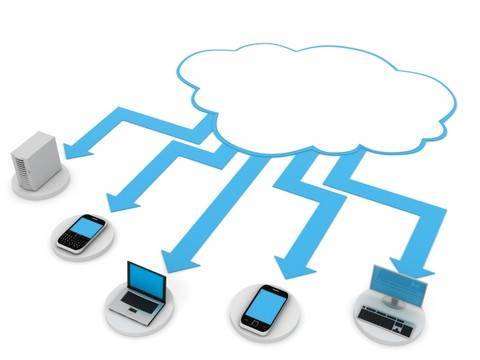
My presentation is about a study I recently conducted to examine reference librarians’ adoption of cloud computing technologies, particularly the general-purposed and consumer-oriented SaaS tools, including but not limited to cloud-based video services (e.g. YouTube), file sharing services (e.g. Dropbox), information collection services (e.g. Google Forms), calendar services (e.g. Google Calendar), custom social networking sites (e.g. Ning) and forums (e.g. VoiceThread). The study discovered that reference librarians were using these tools for a variety of different purposes, ranging from facilitating internal communication and collaborative work, to supporting information literacy instruction. In the meantime, librarians also discussed the advantages and disadvantages of using these tools. Overall, this was an interesting study. And I will be sure to share the results with my students in the Reference and Information Service class in the fall.  Maybe I will even ask them to each explore one of the tools so that they can better understand and reflect upon the study findings – hands-on experience is always an effective learning strategy.

Anyways, I very much look forward to QQML 2013 and will definitely dedicate a blog entry to this conference trip once I get back.

(photo from http://www.entechcomputers.com/resources/what-is-cloud-computing/)